Outcomes for people with systemic vasculitis are better when services include certain key components.
This toolkit uses evidence from the VOICES study to help vasculitis services review current provision, identify priorities for change, and adapt these components to their local context.
It is designed to support practical, locally relevant service improvement, recognising that services vary in their configuration, workforce and resources.
The content of this toolkit is based on the VOICES study -Vasculitis Outcomes In relation to Care
ExperienceS - which examined how vasculitis services are organised and delivered across the UK and
Ireland, and how different service components relate to patient outcomes.
VOICES brought together evidence from a survey of vasculitis services, interviews with patients,
organisational case studies and linked routine health data. The study identified key components of vasculitis
care associated with better outcomes, including fewer serious infections, fewer emergency hospital admissions
and, in some contexts, reduced mortality.
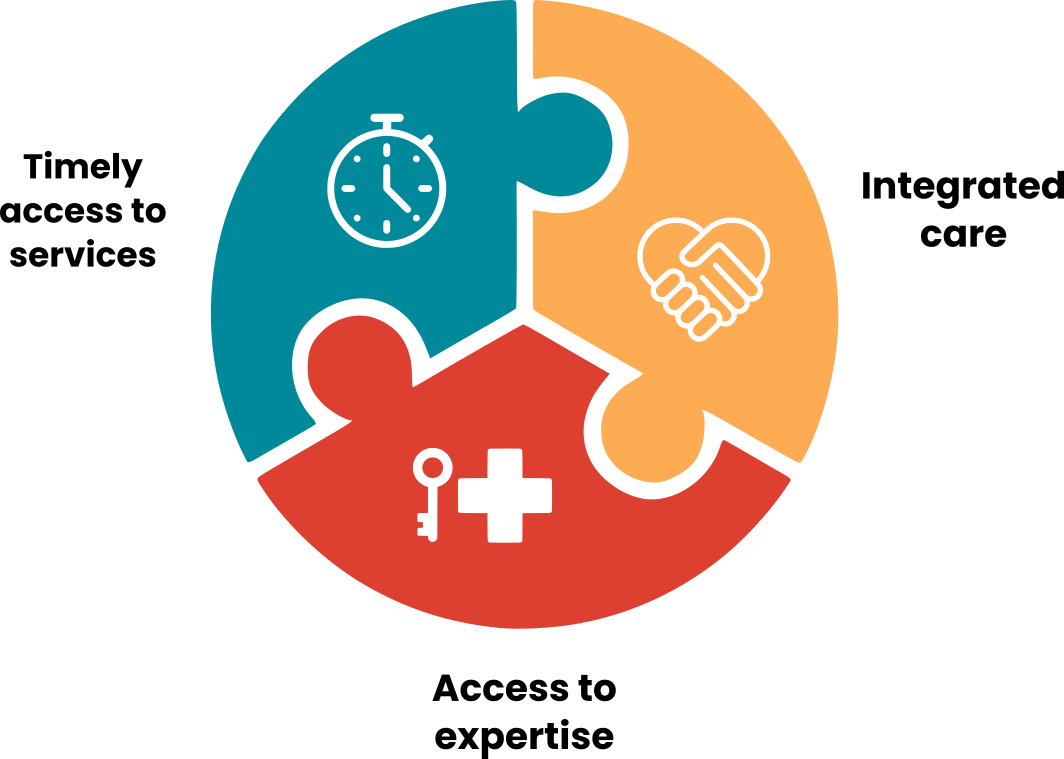
Across the study, effective vasculitis care was characterised by timely access to specialist expertise,
integrated working across teams, continuity of care, and services that helped patients feel safe. These
components provide the basis for the toolkit and are intended to help services consider how best to organise
care locally.
Recognising that some service components are interdependent and often co-exist together within care delivery systems, this guidance should be considered as a holistic package to improve the whole care pathway.
Find out more
about the VOICES study.

Hollick et al. (2024). The Lancet Rheumatology, Volume 6, Issue 6, e361 – e373
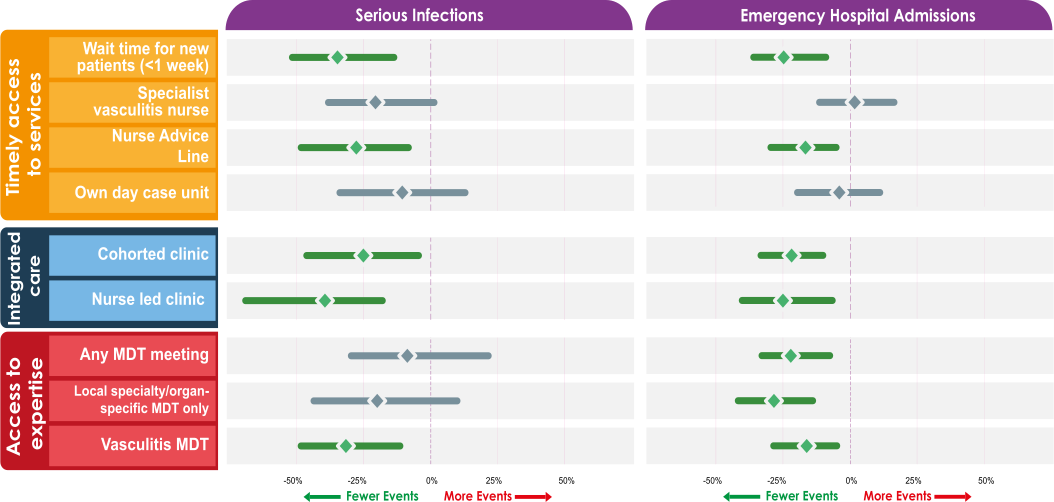
Patients looked after in services who were able to see new patients with suspected vasculitis within 7 days had 30% fewer serious infections, 22% fewer emergency admissions to hospital and a 41% reduction in mortality.
“I had such an incredibly intuitive [general practitioner] who did the bloods that day, and…an amazing team at the [hospital], to quickly read those results and to fast-track that treatment for me. Because I do know that they saved my kidneys.”
Warren James, Avril Nicoll, Louise Locock, Lorraine Harper, Mark Little, Neil Basu, Rosemary J Hollick, P184 Geographical variations in delivery of intravenous treatments for ANCA-associated vasculitis, Rheumatology, Volume 63, Issue Supplement_1, April 2024, keae163.223, https://doi.org/10.1093/rheumatology/keae163.223
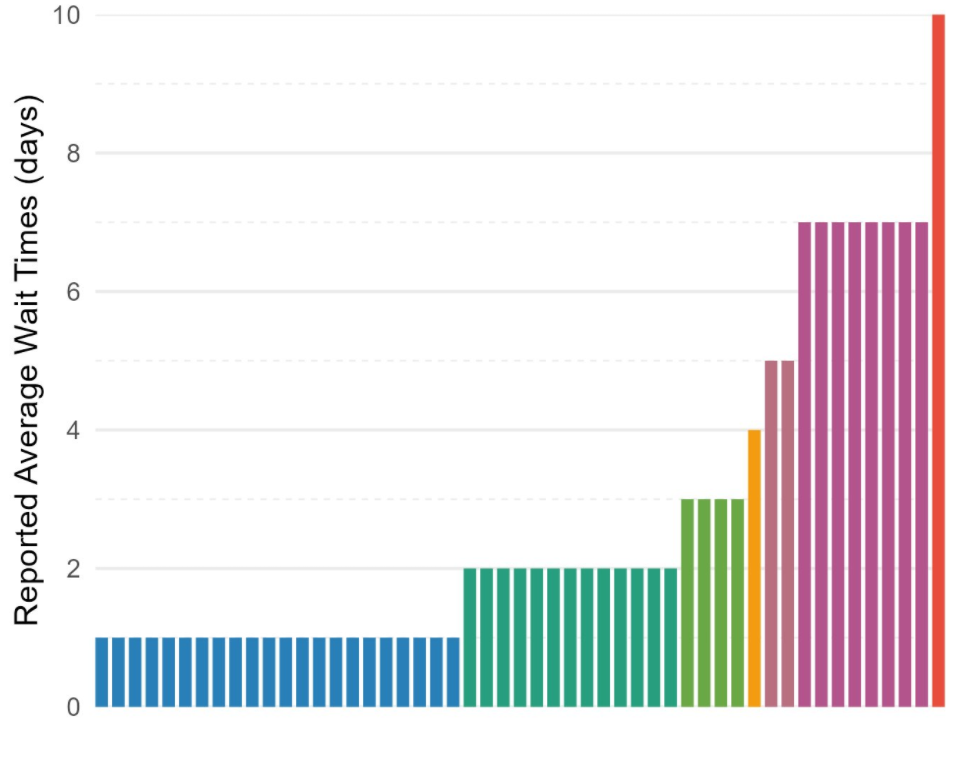
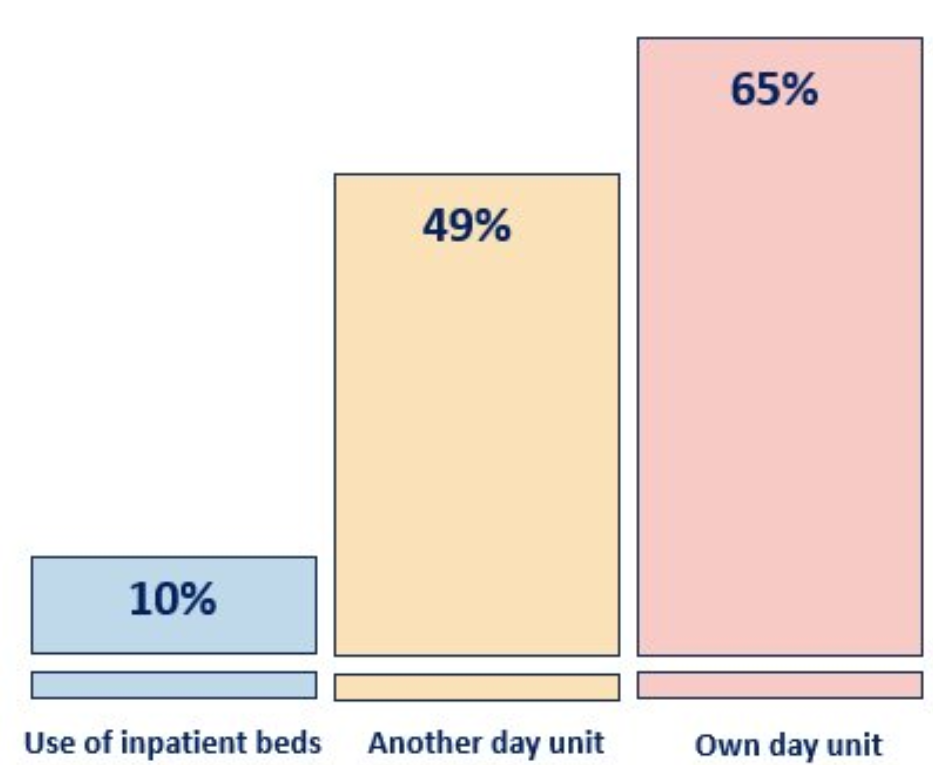
Services faced significant challenges in prescribing and delivering high-cost drugs to manage systemic vasculitis: balancing accountability versus bureaucracy, and tensions between different specialties looking after vasculitis patients when implementing access to high-cost drugs via multi-disciplinary networks. There was significant variation in how services delivered intravenous treatments: 10% used inpatient beds; 35% accessed another specialty unit or shared a daycase facility; 65% used their own specialty daycase unit. Average wait time for urgent IV treatment was 2.67 days (range 1-10 days). 18% of services had waiting times >7 days, and of those 67% accessed intravenous treatments via another daycase facility.
“they couldn’t get me booked in right away because there just wasn’t space in the ward. You have to get your slot. So I had to have three methylprednisolone infusions, and this is where they just put a massive dose of steroids straight in your bloodstream. … that little episode cost me two vertebrae in my spine.”

Hollick et al. (2024). The Lancet Rheumatology, Volume 6, Issue 6, e361 – e373
Patients looked after in services with cohorted clinics had 25% fewer serious infections and 19% fewer emergency admissions to hospital.
“what I do like about the way they go about their business … every time I go in, they take a urine sample, a blood sample … and … they reach out to the [ear, nose, and throat] department, or to maybe the chest department, or speech [and language therapy]…”
Hollick et al. (2024). The Lancet Rheumatology, Volume 6, Issue 6, e361 – e373
Patients looked after in services with nurse-led clinics had 35% fewer serious infections and 25% fewer emergency admissions to hospital.
“Because I’m their ‘go to’, the nurse that they see the most … they’ll talk to me about everything, so sometimes it’s relationship and sex advice … A lot of it is managing the side effects of their medication and flares.”

Nurse-led advice lines provide a single point of contact into the vasculitis service for patients and should be supported by clear escalation pathways.
Hollick et al. (2024). The Lancet Rheumatology, Volume 6, Issue 6, e361 – e373
Patients looked after in services with access to a nurse advice line had 24% fewer serious infections and 15% fewer emergency admissions to hospital.
“If I'm not sure on anything I ring her and I've got a direct number… so if I'm thinking, 'Hang on, that doesn't look right…’ Or there was a doctor looked at my bloods and he says, 'Oh, I think you should stop this [medication].’…and then the vasculitis nurse rang me and said, 'No, that figure's good.’”
Hollick et al. (2024). The Lancet Rheumatology, Volume 6, Issue 6, e361 – e373
Patients looked after in services with vasculitis specialist MDT meetings had 28% fewer serious infections and 14% fewer emergency admissions to hospital.
“The renal consultants and the rheumatology consultants work as a multidisciplinary team for people with vasculitis. They talk to each other before they make a decision, such as whether I need another rituximab treatment”

Use this section to review how vasculitis care is currently organised in your local setting and to identify
which key components to prioritise for improvement.
Mapping your current service against the key service components can help you see what is already established,
what is developing, and where there may be gaps. This can support practical decision-making, recognising that
it may not be feasible to implement or strengthen all five components at once.
You can also use the catalyst film alongside the mapping exercise to include patients, families and NHS staff in identifying and planning local service improvements.
To support this process, we have provided an online mapping table. This is designed to help you reflect on your current service, identify what is already in place, and consider what you may be able to build on.
The table allows you to:
| Key Component | Rheumatology | Nephrology | Respiratory | Ear, Nose & Throat | Neurology | Dermatology | Other |
|---|---|---|---|---|---|---|---|
|
Wait times new <7 days
Serious infections ⬇30%
Emergency hospital
admissions ⬇22%
Mortality ⬇41%
|
|||||||
| Access IV therapy <7 days | |||||||
|
Care via cohorted clinics
Serious infections ⬇25%
Emergency hospital
admissions ⬇19%
|
|||||||
|
Nurse-led clinics
Serious infections ⬇35%
Emergency hospital
admissions ⬇25%
|
|||||||
|
Nurse advice line
Serious infections ⬇24%
Emergency hospital
admissions ⬇15%
|
|||||||
|
Access to MDT meeting
Serious infections ↓28%
Emergency hospital admissions ↓14%
|
Which of the key components are established, developing, or not in place in your service? It’s okay if you don’t know – now is a great time to look into it and find out. This is an opportunity to discuss with other specialties and learn more about vasculitis care in your setting.
The heat map you generate will be available to reference on the Cost Calculator page in the next step of this toolkit.
| Key Component |
|---|
|
Wait times new <7 days
Serious infections ⬇30%
Emergency hospital
admissions ⬇22%
Mortality ⬇41%
|
| Access IV therapy <7 days |
|
Care via cohorted clinics
Serious infections ⬇25%
Emergency hospital
admissions ⬇19%
|
|
Nurse-led clinics
Serious infections ⬇35%
Emergency hospital
admissions ⬇25%
|
|
Nurse advice line
Serious infections ⬇24%
Emergency hospital
admissions ⬇15%
|
|
Access to vasculitis MDT meeting
Serious infections ↓28%
Emergency hospital admissions ↓14%
|
Developed as part of the VOICES study, this catalyst film is based on interviews with 32 people across
the UK about their experiences of living with systemic vasculitis and using healthcare services.
Participants also shared their ideas for service improvement. The examples included in the film
highlight the importance of good communication, coordinated care and feeling safe within services.
Please use the film as a catalyst for local conversations between patients, families and NHS staff
about how vasculitis services currently work, what matters most to people using them, and how
experiences of care can be improved.
Use the cost calculator to estimate the potential financial impact of implementing selected key service
components in your local vasculitis service.
This calculator allows you to enter the approximate number of patients with ANCA-associated vasculitis in your
service. It then uses data from the VOICES study to estimate the potential cost savings associated with
introducing specific service components.
Recognising that some service components are interdependent and often co-exist within care delivery systems,
they should be considered as a holistic package to improve the whole care pathway.
Consider the key components and the heat map you generated in the previous step of this toolkit when you use the cost calculator (if you have not completed this step you can do so now below). You can model the cost savings of introducing several service components and download a PDF summary to support
local discussions, service planning and business cases for change.
| Key Component |
|---|
|
Wait times new <7 days
Serious infections ⬇30%
Emergency hospital
admissions ⬇22%
Mortality ⬇41%
|
| Access IV therapy <7 days |
|
Care via cohorted clinics
Serious infections ⬇25%
Emergency hospital
admissions ⬇19%
|
|
Nurse-led clinics
Serious infections ⬇35%
Emergency hospital
admissions ⬇25%
|
|
Nurse advice line
Serious infections ⬇24%
Emergency hospital
admissions ⬇15%
|
|
Access to vasculitis MDT meeting
Serious infections ↓28%
Emergency hospital admissions ↓14%
|
There are two calculators available – the univariable calculator and the multivariable calculator. These look at the costs associated with the presence or absence of key service components, adjusted for age at index date, sex, local area measure of deprivation (quintiles), the Scottish Government urban rural classification, and all two-way interactions.
The calculator works by assuming the ‘average patient’. Age was median centred and scaled such that one unit of change corresponded to a decade, and sex was deviation coded so the intercept term represented the average for males and females. Please see the published paper for further information on methodology.
The healthcare costs were obtained from Public Health Scotland, Scottish Health Service Costs (Hospital Cost Breakdown, R040: Specialty costs and activity), available in the 2023 to 2024 files listing. We used the Scottish average cost of an inpatient hospital admission (average stay 4.6 days): £4,851 (gross). Costs may differ depending on case mix and region.
This section focuses on how the key service components can be adapted to different vasculitis services,
workforce models and care pathways.
The case studies and examples illustrate how prioritised components may be implemented in practice,
recognising that services vary in how they are organised, commissioned and resourced. They are intended to
support local, regional and national planning, depending on where change is needed.
The key service components are closely linked and should be considered as a set of interdependent components
that can support improvement across the whole vasculitis care pathway.
To preserve anonymity, the case studies are not named. Instead, the table describes key features of each service model, including country, site arrangements, leadership, specialist nursing provision and service focus.
The case studies illustrate different ways in which vasculitis services deliver key components in practice. They are intended to help you consider what is similar to your own service, what might be adaptable, and which elements could support local service development.
“The ANCA test was such a gamechanger for improving vasculitis care but the test on its own isn’t enough – you’ve got to know when to use it, have a good relationship with the labs, and be in a position to act urgently when there’s a positive result. I’ve managed to get it so that every positive ANCA locally is copied to me. I can then get in touch proactively with the doctor who made the request and offer my input”
“We discussed with the haematology/oncology day unit how to facilitate them giving IV cyclophosphamide, and what they need or want from us. They have agreed that they will give it, but only on a set morning a week. What they wanted was just to administer it. So, I said, ‘Well, what if we come along,’ — and this may change with time and perhaps with better relationships — ‘If we come along, answer any questions, make sure they’re fine to get it, check their bloods and prescribe,’ and they said yes. And they’re happy enough with that because they give it all the time to their patients. I have changed my clinic so that I can be available if needs be on a Monday to go and say hello to the patient.”
”We’re a well-known centre of excellence for vasculitis, which is great, but it’s not right that patients travel for hours to see us, or that they get so dependent on emailing us with their queries. I worry that they miss out of developing he local relationships that will help keep them safe when they need things we can’t provide, like unscheduled care. To be frank, it’s also getting unsustainable for us because we’re not properly funded for it. A model that’s driven by individual patients advocating for themselves is not ideal. We need to find better ways for services to draw on the expertise of specialist centres while delivering more care locally”
”There’s so much that specialist nurses could be doing to improve vasculitis patients’ experiences of care and outcomes, but there’s no blueprint for the role. How it develops in a service seems to depend as much on the vision of consultants and nurse managers as the nurse themselves, and it takes time to integrate your role and figure out what it means. I don’t have many hours but I do have a lot of autonomy. I’m developing my skills in holistic approaches, like talking therapies for mental wellbeing, and lifestyle counselling so patients can have better underlying health to cope with vasculitis and its treatments.”
All services looking after patients should have access to regular vasculitis specialist multi-disciplinary team (MDT) meetings. There should be protected time and administrative support for leadership and attendance at MDT meetings and recording of outcomes
”What we’ve found is that meeting regularly as Team Vasculitis doctors, nurses and pharmacists allows us to troubleshoot practical issues around patient safety and focus on service improvement in response to patient feedback.”
Help us improve the toolkit — share your experience by completing our short survey.
Take the surveyThis section brings together tools, templates and practical materials to support local vasculitis service improvement. Current resources are grouped by topic and include materials on patient experience, primary care recognition and referral, and specialist vasculitis nurse roles. Further resources will be added as the toolkit develops.
VOICES (Vasculitis Outcomes In relation to Care ExperienceS) examined how the organisation and delivery of vasculitis services influence patients’ experiences, health outcomes and use of healthcare.
People with systemic vasculitis often receive care from several specialties and services. Before VOICES, there was limited evidence about which features of service organisation were most important for delivering effective, coordinated care.
The study found that good vasculitis care was characterised by timely access to services and treatment, integrated care, continuity and access to specialist expertise. Specific service components, including rapid review of new patients, nurse-led advice lines and clinics, cohorted vasculitis clinics (where patients with vasculitis are seen in the same clinic), and access to specialist vasculitis multidisciplinary team meetings, were associated with fewer serious infections and emergency hospital admissions. Timely access to specialist review for new patients with suspected vasculitis was also associated with lower mortality.
Patient and professional accounts helped explain how these components worked in practice. They supported communication and coordination across specialties, helped overcome professional boundaries, strengthened continuity of care and contributed to patients feeling safe.
The findings have informed the service specifications within the 2025 British Society for Rheumatology recommendations for the management of ANCA-associated vasculitis.
This toolkit translates the VOICES evidence into practical resources that services can use to review current provision, prioritise and make a business case for change, and adapt the key components to their local context.
This toolkit is based on findings from the VOICES study - Vasculitis Outcomes In relation to Care ExperienceS - a programme of research funded by Arthritis UK to understand how the organisation and delivery of vasculitis care relate to patient outcomes and experiences. The VOICES study was funded under grant reference 22088 (Chief Investigator, Dr Rosemary Hollick).
Development of the toolkit content was supported by the University of Aberdeen. Development of the toolkit website and cost calculator was funded by CSL Vifor. CSL Vifor had no input into the content of the toolkit.
We are very grateful to all patient contributors with lived experience of systemic vasculitis who have been involved in the VOICES study.
We also wish to acknowledge our collaborators, the UK and Ireland Vasculitis Society and the Scottish Systemic Vasculitis Managed Clinical Network, for their support in the conceptualisation and delivery of the study. This included development and distribution of the vasculitis provider survey, recruitment of case study sites, and hosting workshops to discuss study findings and inform recommendations.
We are also grateful to the European Reference Network for rare immune disorders for supporting the development and distribution of the survey to its members.